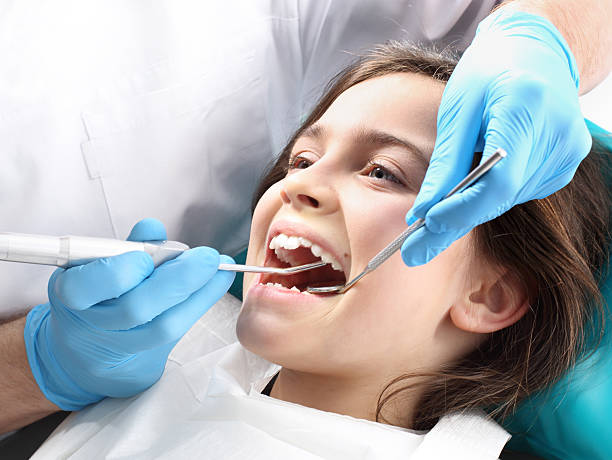
Mixed dentition is the stage when a child has both baby (primary) teeth and permanent teeth at the same time. This stage happens most commonly between roughly ages 6 and 12. It matters orthodontically because permanent teeth are erupting while the jaws, dental arches, and bite are still developing.
Orthodontists pay close attention to this window for several reasons. Permanent teeth need an open, adequate pathway to erupt into place. Baby teeth help hold space for the permanent teeth waiting underneath them. Jaw growth is actively changing how much room is available for new teeth to settle. Crowding, crossbites, ectopic eruption, and other bite problems often become visible for the first time during these years.
Some of these changes are simply part of normal development and only need to be watched. Others may benefit from early guidance or treatment while your child’s mouth is still growing. Neither outcome means something has gone wrong. In either case, an orthodontic evaluation can help clarify which path fits your child.
For families in Lancaster, Ephrata, and Lititz, the mixed dentition years are an important period for monitoring how permanent teeth are erupting and whether the developing bite has enough space to progress normally.
What Is Mixed Dentition?
Children move through three stages of dental development. First comes primary dentition, when only baby teeth are present. Next comes mixed dentition, when baby teeth and permanent teeth exist side by side. Finally comes permanent dentition, once permanent teeth have replaced all the baby teeth.
Mixed dentition does not simply mean a child is “losing baby teeth.” It is a distinct developmental stage. During this time, both sets of teeth coexist in the mouth. This coexistence directly affects available space, tooth eruption timing, and how the bite comes together. Dentists sometimes call this the transitional dentition stage, since the mouth is transitioning from one full set of teeth to another.
When Does the Mixed Dentition Stage Usually Begin?
Mixed dentition commonly begins around age 6, when the first permanent molars and the lower front permanent incisors typically erupt. This is often the first sign parents notice that the process has started.
Every child’s timeline looks a little different. Dental age does not always match chronological age. The eruption sequence can vary from one child to the next without any cause for concern. A child who starts a bit earlier or later than a sibling did is usually still within a normal range.
When Does Mixed Dentition Usually End?
The mixed dentition stage typically continues until permanent successors have replaced most of the primary teeth. This commonly happens by the early adolescent years, though the exact timing depends on each child’s individual development.
There is no single hard cutoff age. Some children finish earlier, and others take a bit longer. What matters more than an exact age is whether the process is progressing in a generally expected pattern.
Which Baby and Permanent Teeth Are Present at the Same Time?
During mixed dentition, it is common to see primary molars and primary canines still in place. At the same time, permanent incisors and first permanent molars have often already erupted. Premolars and canines tend to arrive later in the sequence.
This overlapping mix is exactly why the mixed dentition years create a changing space-management environment. As some teeth exit and others arrive, the available room in your child’s dental arch keeps shifting.
Why Do Ages 6–12 Matter So Much for Orthodontic Development?
This age range brings together several processes at once. Permanent teeth are erupting, jaws are growing, and arch dimensions are changing. At the same time, primary teeth are being replaced, and permanent bite relationships are starting to take shape.
Put simply, developing jaws, changing teeth, and the space available to them combine to shape orthodontic development. None of these factors work in isolation, which is part of why this stage deserves attention.
Permanent Teeth Are Actively Erupting
During mixed dentition, permanent teeth are moving from their developmental positions inside the jawbone through the gum tissue and into the mouth. This eruption pathway, along with its timing and sequence, depends on having enough available space.
For a closer look at the general order and timing of when specific teeth typically arrive, families can review a normal tooth eruption timeline. This article focuses instead on why eruption itself matters to orthodontic planning. Eruption problems are often the first clue that space or growth needs a closer look.
Jaw Growth Changes the Space Available for Teeth
Dental arch dimensions are not fixed during childhood. Jaw growth actively changes how much room exists for permanent teeth to settle into place, which is why dental arch development is closely tied to orthodontic planning.
This creates a fairly direct chain of cause and effect. Jaw development influences arch size, and arch size determines available space. That available space, in turn, affects how well permanent teeth line up. Orthodontists use this connection as part of ongoing orthodontic growth monitoring throughout the mixed dentition years.
The Bite Is Still Developing
The relationship between the upper and lower teeth is still changing during this stage. As permanent teeth arrive and jaws continue to grow, bite patterns that were not obvious earlier can start to show.
A few bite relationships sometimes become noticeable during these years, including crossbite, overbite, overjet, open bite, and underbite.
Why Baby Teeth Still Matter During Mixed Dentition
A common question parents ask is why baby teeth matter at all if they are going to fall out anyway. The honest answer is that primary teeth do more than help your child chew. They also play a developmental role that affects the permanent teeth still waiting beneath them.
Baby Teeth Help Preserve Space for Permanent Teeth
Each primary tooth holds a place in the dental arch. That space preservation matters because it gives the permanent successor room to erupt into a normal position later on.
Baby Teeth Help Guide Permanent Tooth Eruption
The roots of primary teeth and their normal timing of exfoliation help guide the pathway that successor teeth will follow. When a baby tooth’s root resorbs on a typical schedule, it tends to support a smoother eruption process for the permanent tooth underneath.
Losing a Baby Tooth Too Early Can Change the Available Space
When your child loses a baby tooth earlier than expected, neighboring teeth can begin to drift into that open space. This drifting can reduce the eruption space meant for the permanent tooth, which can make crowding more likely.
This does not automatically mean a problem will develop. It is simply a reason a dentist or orthodontist may want to monitor the area more closely. In some cases, your child’s dentist may recommend a space maintainer to help hold the space open until the permanent tooth is ready to erupt.
Keeping Baby Teeth Too Long Can Also Affect Eruption
The opposite situation can also happen. A baby tooth that is retained longer than expected, sometimes called delayed exfoliation, can affect how its permanent successor erupts.
When this happens, an orthodontist or pediatric dentist may want to check a few things. They may confirm that the permanent successor exists and whether it is positioned normally. They will also check whether it appears blocked or whether its eruption seems delayed compared to the surrounding teeth.
How Tooth Eruption and Available Space Are Connected
The relationship between eruption and space comes down to a fairly simple idea. A permanent tooth’s size, the space available in the arch, and the pathway that tooth follows on its way all play a role. Together, they determine how likely a tooth is to erupt into a normal position.
What Happens When There Is Enough Space?
When adequate space and a normal eruption pathway exist, permanent teeth generally have a better chance of erupting into functional positions. This does not guarantee perfectly straight teeth, since alignment depends on multiple factors working together, but adequate space removes one major obstacle.
What Happens When There Is Not Enough Space?
Insufficient dental space can lead to a few different outcomes. Crowded teeth in children are one of the most common results. Other eruption problems include overlapping teeth, rotated teeth, ectopic eruption, or teeth that erupt in a displaced position. In some cases, insufficient space can contribute to impacted teeth later in development.
These orthodontic crowding patterns are exactly why monitoring space during the mixed dentition years matters so much.
What Is Ectopic Eruption?
Ectopic eruption happens when a permanent tooth follows an abnormal eruption path. Instead of coming in where expected, the tooth may become blocked or affect the position of a neighboring tooth.
This is one of the clearer examples of why the mixed dentition stage benefits from monitoring. Catching ectopic eruption early often makes management simpler than addressing it later. If your child’s tooth becomes significantly blocked on its way in, an evaluation for a tooth that does not erupt on its own may become part of the conversation.
What Orthodontic Problems Can First Become Noticeable During Mixed Dentition?
Several orthodontic concerns tend to surface for the first time during the mixed dentition years. Each one deserves its own dedicated look, so this section covers them briefly rather than in full depth.
Crowding and Lack of Space
Permanent teeth are generally larger than the baby teeth they replace. As they erupt, this size difference can reveal space deficiencies that were not obvious before.
Crossbite
A crossbite happens when the upper and lower teeth do not line up correctly, either from side to side or from front to back. Families who want a closer look at a crossbite in children can find more detail on causes and treatment timing.
Open Bite
An open bite occurs when certain teeth do not meet when the jaw is closed, often related to habits or how the bite is developing. Families who want a closer look at open bite treatment for children can find more detail on causes, signs, and treatment timing.
Underbite
An underbite describes a lower arch and jaw relationship where the lower teeth sit in front of the upper teeth. Like other bite relationships, this can become more visible as permanent teeth continue to erupt.
Excessive Overbite or Overjet
Overbite refers to vertical overlap between the upper and lower front teeth, while overjet refers to horizontal projection of the upper teeth. Families who want a closer look at overbite vs. overjet in children can find more detail on causes and treatment timing. Either pattern can become more noticeable during mixed dentition as the permanent front teeth settle into place.
Delayed or Abnormal Tooth Eruption
Eruption that is significantly delayed or noticeably asymmetric compared to the opposite side of the mouth may deserve a closer look from your child’s pediatric dentist. This is one of the more common reasons a dentist recommends an orthodontic opinion during these years.
How Do Orthodontists Evaluate a Child During Mixed Dentition?
Parents often wonder what actually happens if they bring a 7, 8, 9, or 10-year-old in for an evaluation. The process is calm and straightforward, and it is designed to build a clear picture of how development is progressing.
Checking Which Teeth Have Erupted
An orthodontist starts by noting which permanent teeth have already erupted and how many primary teeth remain. This snapshot of mixed dentition and dental age helps establish a baseline for tracking development. It also helps determine treatment timing later on, if treatment is ever needed.
Measuring Space in the Dental Arches
Next, an orthodontist assesses whether enough space exists in the dental arches for the permanent teeth still on their way. This step does not require getting into technical measurement formulas. The goal is simply to understand whether the arch has adequate room.
Evaluating the Developing Bite
An orthodontist also looks at how your child’s bite is coming together. This includes checking for crossbite, jaw relationship concerns, overjet, overbite, asymmetry, and functional shifts in how the jaw closes. Anything worth a closer look, including signs of a crossbite, connects back to the bite-related concerns described earlier in this article.
Monitoring Jaw Growth
The upper jaw, lower jaw, and overall facial growth pattern are all still changing during this stage. Orthodontists pay attention to how that growth is progressing over time. This monitoring can also open the door to a conversation about functional appliances or early orthodontic guidance if a growth pattern needs support.
Using Digital Imaging or X-Rays When Appropriate
Digital imaging or dental X-rays can help evaluate unerupted permanent teeth, eruption pathways, missing teeth, crowding, or teeth that appear impacted or ectopic. Imaging is not required at every visit. It is used when it adds useful information for your child’s specific situation.
Does Every Child in Mixed Dentition Need Orthodontic Treatment?
No. An orthodontic evaluation and orthodontic treatment are not the same thing, and this distinction matters. Many children evaluated during mixed dentition end up needing nothing more than periodic observation.
Other children benefit from intervention aimed at a specific developing problem. Some are better served by waiting for comprehensive treatment once more permanent teeth have erupted. The American Association of Orthodontists recommends an initial check-up by age 7. This timing allows an orthodontist to catch developing concerns early, without assuming every child will need treatment right away.
When Observation May Be Enough
Many children show normal eruption patterns along with mild, temporary irregularities. These often resolve on their own as more permanent teeth come in. In these cases, periodic monitoring is usually all that is needed.
When Early Orthodontic Treatment May Be Considered
Early treatment may be worth discussing in situations involving severe crowding, a crossbite, a functional jaw shift, a significant jaw discrepancy, or notable eruption problems. These examples illustrate general categories. They are not meant to predict what any individual child will need.
Why Some Children Are Monitored Until More Permanent Teeth Erupt
Sometimes waiting provides a clearer picture. As more permanent teeth erupt, an orthodontist can see the developing bite and arch space more completely. This can lead to a more accurate plan. This is not the same as early treatment always being the better choice. Timing should match the specific problem, not a general rule.
What Is Interceptive Orthodontics During Mixed Dentition?
Interceptive orthodontics refers to treatment aimed at a specific developing problem while a child’s teeth and jaws are still changing. Families who want a fuller explanation of this approach can read more about interceptive orthodontics and how it is typically used.
Creating or Preserving Space
Interceptive treatment can sometimes support arch development or help manage available space during the mixed dentition years. This is not a guarantee against needing extractions later, but it can be a useful part of an overall plan.
Guiding a Developing Bite
Some interceptive approaches focus on guiding a crossbite or jaw relationship toward a more typical pattern. This works best while the jaw is still growing and more responsive to guidance.
Supporting Normal Eruption
In select cases, interceptive care can help reduce obstacles standing in the way of normal eruption. This is used only when doing so is clinically appropriate for that child’s situation.
When Should Lancaster Parents Schedule an Orthodontic Evaluation During Mixed Dentition?
Families across Lancaster, Ephrata, and Lititz have several good reasons to schedule an early orthodontic evaluation during the mixed dentition years. A few common signs to watch for in your child include:
- Permanent teeth erupting behind baby teeth that have not yet fallen out
- Noticeable crowding
- Unusually early or late tooth loss
- A visible crossbite
- A jaw that shifts to one side when biting down
- Front teeth that project significantly
- Asymmetrical eruption between the left and right sides
- A direct recommendation from a pediatric dentist
Parents searching for an orthodontist in Lancaster, PA do not need to wait for a specific age or a dental referral. A pediatric orthodontist in Lancaster, PA can evaluate your child whenever a parent has a concern.
The same signs apply to families in Ephrata and Lititz. Tooth eruption and jaw development follow the same patterns no matter which of our locations is closest. Families near smilebuilderz’s Ephrata office have the same access to a kids orthodontic evaluation as families closer to Lancaster.
Frequently Asked Questions About Mixed Dentition and Orthodontics
What does mixed dentition mean?
Mixed dentition means a child has both primary (baby) teeth and permanent teeth present in the mouth at the same time.
What age does mixed dentition start?
Mixed dentition usually starts around age 6, though the exact timing varies from child to child.
What age does mixed dentition end?
Mixed dentition typically ends between ages 11 and 13, depending on each child’s development.
Is it normal for permanent teeth to look crowded at first?
Mild, temporary crowding is common as permanent teeth first erupt. It is often different from persistent crowding that continues as more teeth come in. An orthodontist can help tell the difference.
Should my child see an orthodontist before all baby teeth fall out?
Yes. An evaluation during mixed dentition can be useful because some developmental problems are easier to identify before all the permanent teeth have erupted.
Does an early orthodontic evaluation mean my child needs braces?
No. Orthodontists simply monitor many children who are evaluated early as they continue to grow.
Can baby teeth affect future braces?
Yes. Baby teeth help preserve space and guide the eruption path of permanent teeth. Both of these roles can influence how straightforward future orthodontic treatment turns out to be.
Why would an orthodontist monitor my child instead of treating them?
Monitoring allows treatment timing to match the specific problem and the child’s growth stage. It also accounts for how the eruption is progressing, rather than starting treatment before it is truly needed.
Schedule a Children’s Orthodontic Evaluation in Lancaster, PA
If your child is somewhere between the baby-tooth and permanent-tooth stages, an orthodontic evaluation can help. This is especially true if you have questions about crowding, delayed eruption, or how the bite is developing. It can also determine whether treatment makes sense now, later, or not at all.
At smilebuilderz, our pediatric orthodontics team monitors mixed dentition, permanent tooth eruption, and developing bites for growing smiles in Lancaster, Ephrata, and Lititz alike. Schedule a children’s orthodontic evaluation to get a clear picture of where your child stands.
